EN
EN

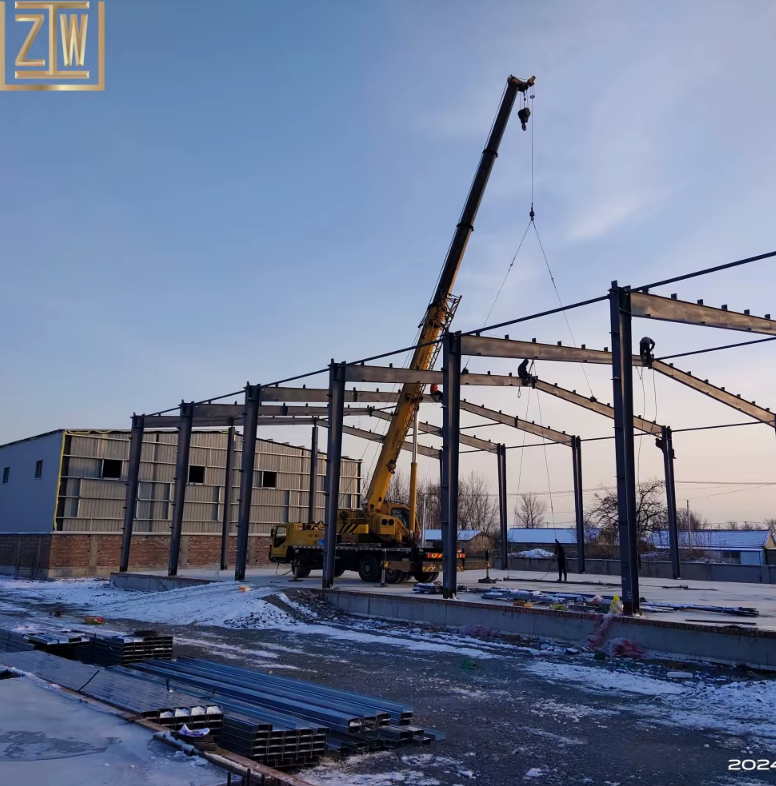
Prioritize Material Quality and Corrosion Resistance
Material quality is the cornerstone of steel structure warehouse longevity. Selecting appropriate steel grades—and matching them to environmental exposure and load requirements—directly determines structural resilience against corrosion, fatigue, and mechanical stress.
Steel Grades (Q235, Q355, ASTM A653) and Their Impact on Long-Term Durability
- Q235: Economical and widely used for interior or low-exposure applications, but lacks corrosion resistance in humid, coastal, or industrial environments without supplemental protection.
- Q355: Offers higher yield strength (355 MPa) and tensile strength (470–630 MPa), making it ideal for heavy-load, high-stress zones like mezzanine supports or crane runway beams.
- ASTM A653: Specifies hot-dip galvanized cold-formed steel sheet with controlled zinc coating mass (e.g., G90, G185). Its sacrificial zinc layer extends service life by 15–20 years versus uncoated steel in moderate climates—verified by accelerated salt-spray testing per ASTM B117.
Structural failures drop 40% when steel grade selection aligns precisely with operational loads and environmental exposure, according to ASCE’s 2023 Guidelines for Structural Steel in Industrial Facilities.
Matching Corrosion Protection to Environment: Humidity, Coastal Salinity, and Industrial Pollutants
Corrosion protection must be performance-matched—not over-engineered or under-specified. Generic “one-size-fits-all” coatings risk premature degradation where conditions demand precision.
| Environment | Protection System | Key Performance Benchmark |
|---|---|---|
| Coastal | Zinc-aluminum alloy coatings (e.g., Galvalume®) | 3× longer lifespan vs. standard galvanizing in ASTM B117 1,000-hour salt-spray tests |
| High Humidity | Multi-layer epoxy-polyurethane finishes | Vapor transmission rate < 0.1 perm; blocks moisture ingress at joints and fastener sites |
| Industrial Zones | Sacrificial anode systems + chemical-resistant topcoats | Neutralizes sulfur dioxide and chloride ion attack; validated per ISO 12944 C5-I classification |
In chloride-rich areas, mismatched coating systems accelerate corrosion rates by up to 70%, per NACE International’s 2022 Corrosion Control in Marine Infrastructure. Third-party certification—such as SSPC-QP 2 for applicator qualification or ISO 12944 compliance documentation—is essential before specification.
Ensure Structural Integrity for Local Climate and Load Demands
Wind, Snow, and Seismic Load Compliance in Steel Structure Warehouse Design
Steel structure warehouses need proper engineering for their specific location hazards rather than just basic assembly work. For areas with heavy snowfall like parts of the northern United States or mountain regions across Asia, roof designs should handle ground snow loads reaching around 50 pounds per square foot according to IBC standards from 2021. Sloped roofs or heating systems help manage snow buildup and drift problems. Buildings near coastlines face another challenge entirely. They have to stand up against winds blowing over 150 miles per hour as outlined in ASCE 7-22 guidelines for Category III structures. This means special attention to how cladding attaches to walls and extra reinforcement at building edges where wind pressure concentrates. When it comes to earthquake-prone areas, engineers rely on moment-resisting frame designs following AISC 341 specifications along with connections that can bend and flex without breaking during tremors. Practical solutions include tapered support columns, thicker webs in key structural areas, and those metal plates connecting beams to columns at crucial points. These features together stop about three quarters of all structural failures caused by extreme weather events or disasters, based on findings published by the Structural Engineering Institute after analyzing damage from recent natural catastrophes.
Critical Connection Details: Welding Standards, High-Strength Bolts, and Anchor Systems
Steel structures rely heavily on their connections, which act like the nervous system - when these fail, problems spread fast through the whole structure. According to AWS D1.1 standards, Complete Joint Penetration (CJP) welds create full strength continuity at main frame joints. This is especially important where there's repeated stress from earthquakes or strong winds. For bolted connections that need to stay tight during movement, engineers specify ASTM A325 or A490 high strength bolts. These maintain proper clamping force even when things shake around. Anchor bolts coated with epoxy should be set deep enough in the ground, typically at least 30 times their diameter, to hold firm in different soil conditions. When it comes to checking everything works right in the field, tests matter a lot. Ultrasonic testing checks weld quality, and measuring bolt tension properly makes all the difference. Studies from the Structural Engineering Institute show this kind of field QA can cut connection failures down by about two thirds, according to their 2023 best practices guide.
Select Advanced Protective Coatings and Insulated Panel Systems
Hot-Dip Galvanizing, Zinc-Aluminum Alloys, and Weather-Resistant Finishes for Steel Structure Warehouse Longevity
A good coating strategy needs to balance metallurgical protection, barrier effectiveness, and thermal management beyond just looking good or saving money upfront. Hot dip galvanizing according to ASTM A123/A153 creates a tough zinc iron alloy layer that actually heals itself when scratched and protects against rust even where the metal gets cut. The newer zinc aluminum alloys like Galvalume which contains about 55% aluminum, 43.5% zinc and 1.5% silicon work better in outdoor conditions, especially fighting off chloride and sulfur pollution from the air. Tests show these materials last 3 to 4 times longer in salt spray tests compared to regular galvanized steel. Adding weather resistant polyurethane topcoats makes surfaces reflect up to 85% of sunlight, which can drop surface temps around 15 to 20 degrees Fahrenheit. This helps reduce stress on screws and panel joints caused by temperature changes throughout the day. When combined with insulated metal panels that have continuous foam cores and factory bonded skins, we get systems that fight corrosion while also improving energy efficiency. These insulated panels typically offer R values up to R32, cutting down on heating and cooling costs by roughly 25 to 30% according to recent studies. Always think of coatings and panels as parts of one complete system rather than separate pieces. This approach ensures everything works together properly over time without compromising adhesion between different layers.
Validate Certifications, Warranties, and Lifecycle Assurance
AISC Certification, ISO 9001 Compliance, and Building Code Alignment for Steel Structure Warehouse Durability
Certification isn't just about filling out forms and signing documents. It actually shows what a company can really deliver in practice. When a fabricator gets AISC certified, they're proving they've met strict standards around qualified staff, validated procedures, proper inspection methods, and full traceability throughout their operations. This makes a big difference in the field where weld defects and measurement mistakes happen less often, which matters because those issues can seriously affect how well structures resist corrosion and maintain structural integrity over time. The ISO 9001:2015 standard goes even further by establishing an official quality management system that covers every step from getting raw materials to putting up finished structures. This helps keep things consistent between different projects and production runs. Building code compliance is another critical area. Fabricators need to show they understand and follow local regulations like the International Building Code, ASCE 7 guidelines, plus any special rules specific to particular regions. Good suppliers don't just talk about these things either. They back them up with actual stamped engineering calculations, have independent experts review their work, and offer long term warranties (typically 20 years or more) that cover everything from materials used to workmanship quality and coating durability. Smart warranty packages also include ongoing support through things like regular corrosion checks, advice on when and how to recoat surfaces, and easy access to technical experts who can help solve problems before they become major issues down the road.
Frequently Asked Questions (FAQ)
What are the most common steel grades used in steel structure warehouses?
Common steel grades used include Q235 for low-exposure applications, Q355 for high-stress zones, and ASTM A653 with zinc coating for extended durability in various environments.
How do environmental factors affect steel structure warehouse coating choice?
Environmental factors such as coastal salinity, humidity, and industrial pollutants determine the type of corrosion protection system required to ensure longevity and performance.
Is certification important for steel structure warehouses?
Yes, certifications like AISC and ISO 9001 confirm the adherence to quality standards, ensuring that the structures are built to last and resist corrosion effectively.