EN
EN

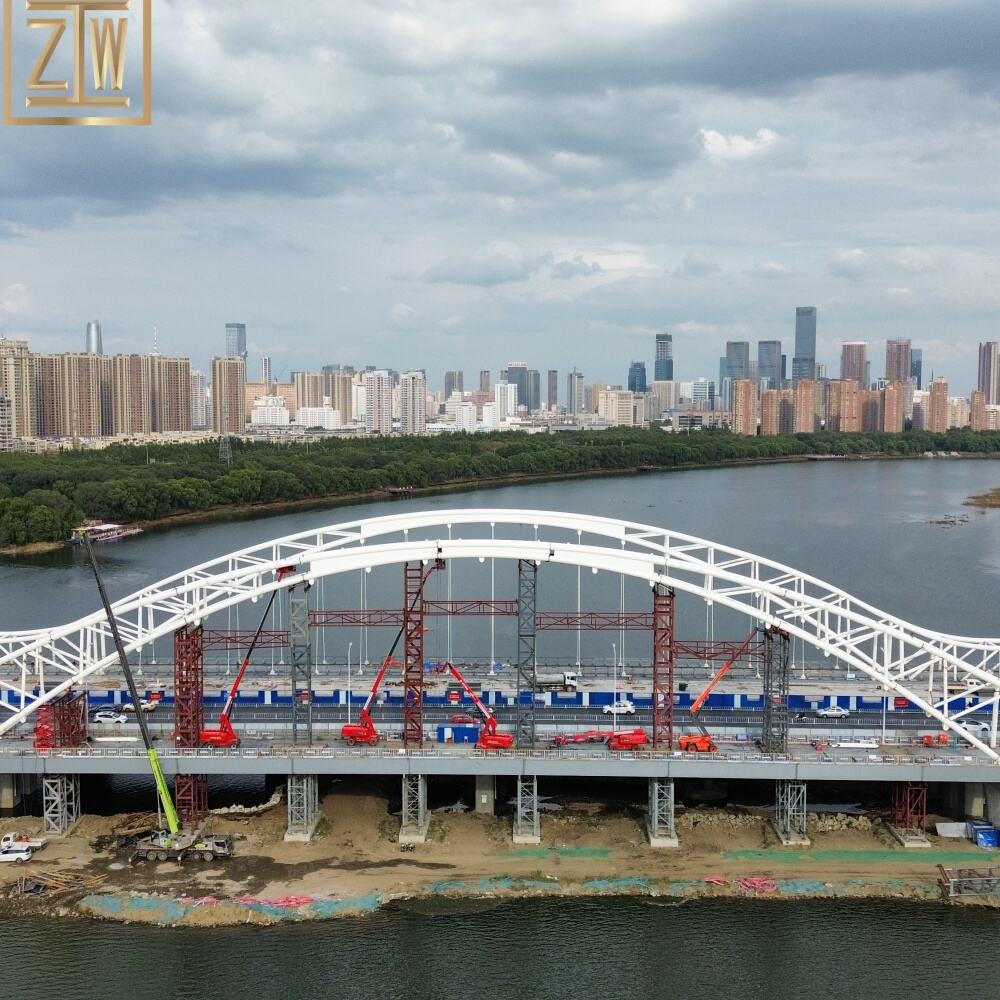
Fundamentals of Steel Bridge Load-Bearing Capacity
Ultimate vs. Serviceability Load Limits Explained
When designing steel bridges, engineers need to consider two main aspects of performance: ultimate strength and serviceability. Ultimate load capacity basically means how much weight a bridge can handle before it fails completely. This number gets calculated with safety factors between 1.5 and 3.0 according to AASHTO standards, which helps account for things like variations in materials, uncertainties in models, and unexpected loads that might occur. Serviceability on the other hand deals with everyday function. These limits control things like how much the bridge bends, vibrates, or cracks so people feel comfortable crossing it and it lasts longer over time. Most highway bridges keep their serviceability around 40% or less of what they could theoretically handle at maximum. This gives a buffer against problems like cracks forming slowly or bearings wearing down gradually. While total failure would obviously mean collapse, when serviceability standards get breached it just means more frequent maintenance work and shorter overall lifespan for the structure, though not necessarily any immediate danger to users.
How Vertical Stiffness and Deflection Control Govern Vehicular Support
The vertical stiffness of a bridge structure basically means how much it resists bending when weight is applied from vehicles passing over it. This characteristic plays a big role in determining not just how comfortable drivers feel while crossing but also affects overall safety and how long the structure will last before needing repairs. Engineers have standards to follow here. According to guidelines set by AASHTO LRFD, most highway steel bridges shouldn't deflect more than what's called L/800. That calculation takes the total span length and divides it by 800 to get the acceptable amount of sagging. Meeting this requirement involves working with several important factors in the design process:
- Girder depth optimization, which increases moment of inertia and reduces curvature under load;
- Use of high-strength steels, which lower strain under dynamic truck axles and suppress plastic deformation;
- Continuous support configurations, which distribute forces more evenly than simple spans and reduce peak bending moments.
Field evidence confirms the stakes: bridges exceeding L/800 deflection exhibit a 70% higher incidence of early-stage fatigue cracking due to amplified cyclic stress ranges. Real-time monitoring systems now validate these stiffness models in situ, enabling data-informed verification of vehicular support compliance.
Critical Design Factors That Determine Steel Bridge Load Capacity
A steel bridge's load-bearing capacity emerges from the precise interplay of material behavior, geometry, and environmental context—not from any single parameter in isolation. Three foundational elements shape this capacity:
- Material properties: Yield strength, tensile capacity, and ductility define how steel responds to static and dynamic loads. High-strength grades (e.g., ASTM A709 Grade 100) increase reserve capacity, while inherent ductility ensures energy absorption during seismic events or overload scenarios—preventing brittle fracture.
- Cross-sectional geometry: I-beam depth, flange width, and web slenderness govern buckling resistance and moment distribution. Wider flanges improve lateral stability and reduce localized stress concentrations; optimized web thickness mitigates shear buckling without excessive weight.
- Load configuration and environmental exposure: Span length, support conditions (fixed, pinned, continuous), corrosion potential, and live-load dynamics all recalibrate design assumptions. Longer spans amplify deflection and second-order effects; corrosive environments demand protective coatings or sacrificial thickness—both affecting effective section properties over time.
These variables are rigorously balanced using AASHTO LRFD methodology, which applies calibrated resistance and load factors to ensure safety margins exceed real-world demands—while preserving economic feasibility.
Real-World Validation: Field Testing and Case Studies of Steel Bridges
I-35W Collapse Aftermath: Lessons for Load Rating and Redundancy
When the I-35W bridge over the Mississippi River collapsed in Minneapolis back in 2007, it highlighted serious problems with how bridges were being rated for load capacity and assessed for structural redundancy. After investigators looked into what went wrong, they found the main issue was gusset plates that were too small for the job. These plates were already problematic enough on their own, but when combined with flawed models showing how loads traveled through the structure, things got really dangerous. The original math had missed how much stress was actually building up at those connection points, sometimes by as much as 30%. The disaster led to major changes in the way AASHTO handles bridge inspections and ratings across the country, requiring new standards that address these kinds of vulnerabilities.
- Three-dimensional load path analysis for all primary connections;
- Periodic reassessment of live-load distributions as traffic patterns evolve;
- Explicit redundancy verification via failure-mode simulation, especially for non-redundant truss systems.
The incident underscored that serviceability performance—particularly subtle deformation trends—is often the earliest indicator of systemic vulnerability in aging steel infrastructure.
AASHTO LRFD Field Data from Modern Steel Girder and Truss Bridges
Recent field validation across 120+ instrumented steel girder and truss bridges demonstrates how modern measurement techniques refine LRFD-based capacity predictions:
| Measurement Method | Deflection Accuracy | Implementation Cost |
|---|---|---|
| Traditional strain gauges | ±15% | Moderate |
| Computer vision systems | ±5% | High initial |
| Laser scanning | ±8% | Very high |
When using non contact techniques for proof testing, engineers can actually see how structures respond dynamically - sometimes the impact forces from big trucks crossing over are 10 to 25 percent higher than what was originally calculated. This kind of data really shows why those LRFD safety standards hold up so well, but also points out places where we might be able to dial back some of the built in caution when actual measurements back it up. Take Pennsylvania's steel truss bridges as a case study. By keeping tabs on how much they bend over time through continuous monitoring systems, bridge engineers there managed to cut down on unnecessary safety buffer by around 18 percent without putting anyone at risk. Safety remains intact, but resources get used more efficiently.
Advancing Steel Bridge Load Capacity with Digital and Resilient Engineering
Digital Twin Integration for Real-Time Load Redistribution Analysis
Digital twin tech is changing how we manage steel bridges. It combines detailed computer models of bridge structures with actual sensors on site, creating virtual copies that react just like the real thing happens right now. The digital twins keep an eye on things like how much force different parts are under, where things might be moving around, what temperatures exist across the structure, and any vibrations happening throughout. When something unusual occurs, like when there's suddenly more traffic than usual or part of the bridge gets damaged somehow, engineers can run simulations to see how weight distribution changes. The biggest benefit comes from spotting areas under too much stress long before anyone notices cracks forming. This lets maintenance crews redirect loads away from problem spots and fix issues specifically where needed, rather than waiting until something breaks down completely.
The results speak for themselves really. Bridges that have these properly tested digital twin models can go 23% longer between inspections while still maintaining 17% higher load limits according to BridgeTech's 2025 report. What makes this technology even more valuable goes beyond just improving how much weight they can handle. These virtual replicas actually simulate how materials react when exposed to different environmental challenges like temperature changes over time or unexpected ground movements from earthquakes. This kind of modeling helps engineers plan better for long term durability issues. We're seeing more widespread adoption throughout various infrastructure systems now, and it's becoming clear that digital twins aren't just nice to have but necessary components for making sure our steel bridges remain safe and functional as traffic patterns shift, weather conditions change, and new regulations come into effect.
FAQs
What is the ultimate load capacity of a steel bridge?
The ultimate load capacity refers to the maximum weight a bridge can support before failing completely, calculated with safety factors according to AASHTO standards.
How is serviceability load limit different from ultimate load capacity?
Serviceability load limits consider daily operations, controlling how much the bridge bends, vibrates, or cracks, ensuring comfort and longevity.
Why is vertical stiffness important in bridge design?
Vertical stiffness affects the resistance to bending under vehicular loads, impacting comfort, safety, and the longevity of the bridge.
What lessons were learned from the I-35W bridge collapse?
The collapse emphasized the need for accurate load ratings and robust structural redundancy, leading to changes in AASHTO standards.
How does digital twin technology improve bridge management?
Digital twin technology allows real-time monitoring and simulation, helping identify stress points and improving maintenance efficiency.