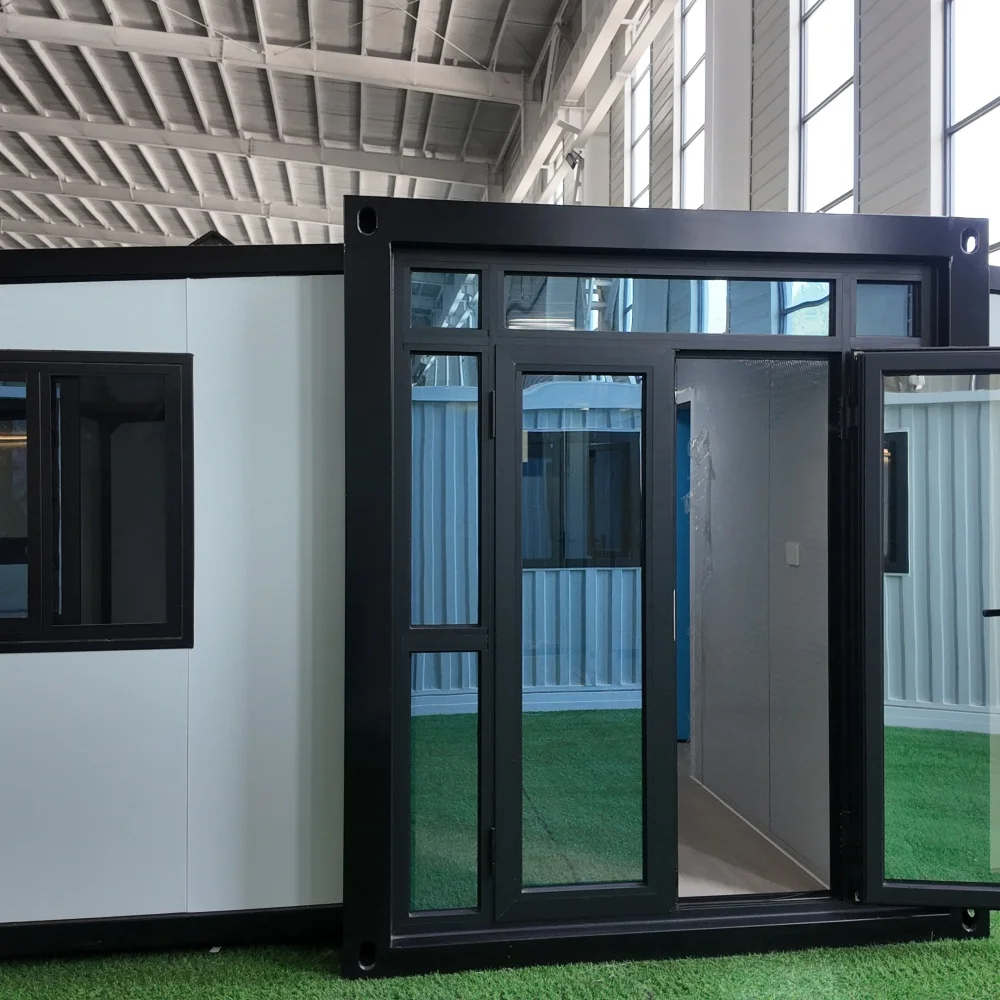
The construction of shipping containers includes corrugated steel walls plus those strong corner castings, which makes these boxes pretty tough against harsh weather conditions and even earthquakes. Back in the day, they were made to handle massive weights on ships - about 60 thousand pounds stacked on top. Because of how sturdy they are built, properly secured containers can actually stand up to winds blowing at around 150 miles per hour. Plus, since each container is basically a building block, architects can create all sorts of different structures without worrying about weakening the overall strength.
Container homes generally last around 30 to maybe even 50 years if maintained properly, which includes things like regular anti-corrosion treatments and keeping moisture at bay. Rust happens much faster near coastlines than it does in dry areas something like 40% quicker actually. But there are ways to combat this problem. Epoxy coatings work pretty well, and upgrading to galvanized steel makes a big difference in slowing down the corrosion process. Some recent studies from last year showed that container homes built with insulation in damp climates still held about 90% of their original strength after twenty years or so, especially when builders included vapor barriers and those special zinc rich primers during construction.
Making holes in walls for windows or doors definitely weakens their ability to hold up structures and usually means we have to add some kind of reinforcement. When someone takes out more than about 15% of a wall's surface area, most of the time extra steel framing becomes necessary. Standard shipping containers can handle around 8,000 pounds at each corner when left untouched, but once they get modified with all those cutouts, cross bracing tends to become essential just to keep things as strong as before. Following IBC building codes properly really depends on getting a qualified engineer involved early in the process. Their expertise makes all the difference in avoiding problems down the road.
The container home built back in 1998 in Astoria, Oregon stands as a testament to durability. Constructed using marine grade Corten steel along with closed cell spray foam insulation, it has developed just 0.3mm of surface corrosion over its quarter century lifespan. That's actually 78 percent less rust damage compared to nearby timber frame houses in the area. When thermal imaging was done on the property, it revealed pretty consistent insulation throughout the structure. Homeowners there report their monthly energy bills come in around 23% lower than what's typical for similar sized homes elsewhere in the region. These results align with what researchers have found generally speaking about properly retrofitted shipping container homes lasting well beyond half a century with proper maintenance.
The rules around container homes are all over the map depending on where someone wants to build. Take Florida for instance, builders there need to make sure their containers can withstand hurricanes with proper anchoring systems. Meanwhile out west in places prone to earthquakes like California, structural reinforcements against tremors are pretty much mandatory. Things get interesting when comparing rural versus city regulations too. Country areas tend to give folks more leeway in how they design and construct these homes. But head into town centers and suddenly there are strict guidelines about what looks acceptable from the street. According to recent data from the Modular Building Institute, nearly 4 out of every 10 counties across America now have special provisions in place regarding foundations and insulation standards specifically for container housing projects.
The IRC sets baseline safety standards, including minimum ceiling heights (7.5 feet) and emergency egress provisions. However, modified containers must prove structural soundness post-alteration—a major compliance challenge. In 22 states, third-party engineering certifications are required for multi-container structures to verify load-bearing capacity.
Zoning classifications directly impact approval likelihood:
| Zoning Type | Container Home Approval Rate | Common Restrictions |
|---|---|---|
| Residential (R-1) | 42% | Size limits, exterior finishes |
| Agricultural (A-1) | 68% | Utility hookup requirements |
| Mixed-Use | 55% | Firewall spacing |
Early engagement with local planning departments improves success rates; 72% of projects require at least one zoning variance (Urban Land Institute 2023).
In coastal California, 18 container homes were approved under conditions requiring Corten steel exteriors and native landscaping to meet environmental guidelines. In Florida, a 12-unit development passed inspection using marine-grade epoxy coatings and hurricane tie-downs rated for 175 mph winds—standards aligned with 2023 IRC amendments.
The way steel conducts heat is pretty intense actually. Without insulation, those container walls can move heat around three times quicker than regular wooden walls do, which means temperatures inside these spaces swing wildly from hot to cold. Some research back in 2022 looked at container homes located in Chennai, India, and what they discovered was pretty telling. The uninsulated containers needed almost 60% more energy for cooling purposes compared to traditional brick structures because of how metal walls let heat pass through them. And there's another problem too. When containers aren't sealed properly, moisture builds up inside, creating conditions where mold grows much faster than we typically see in standard housing. Studies suggest the risk goes up nearly two and a half times higher in these situations.
| Material | R-Value per Inch | Best For | Cost per Sq. Ft. |
|---|---|---|---|
| Spray Foam | 6.5 | Air sealing | $1.80—$3.50 |
| Mineral Wool | 4.0 | Fire resistance | $1.20—$2.00 |
| Polyiso Panels | 6.0 | Exterior layers | $1.50—$2.20 |
| Aerogel | 10.3 | Thin applications | $4.00—$6.00 |
Closed-cell spray foam is used in 67% of conversions due to its air-sealing and moisture-blocking properties. However, combining exterior polyiso panels with interior mineral wool provides superior thermal breaks in humid climates (MDPI 2020).
Passive strategies such as east-west orientation (reducing solar gain by 34%), thermally massive flooring, and 24-inch roof overhangs can reduce HVAC demand by 19% in moderate climates. One Michigan retrofit achieved stable indoor temperatures of 68°F year-round using earth tubes and triple-glazed windows without conventional heating.
A Houston homeowner reduced cooling costs by 40% using 3-inch exterior polyiso panels, radiant barrier roofing, and cross-ventilation slots. The system achieved a U-value of 0.05 BTU/(hr·ft²·°F)—30% better than local energy code requirements (Western Shelter 2020).
Old shipping containers can still hold dangerous stuff left behind from previous loads like industrial chemicals, agricultural poisons, and toxic metals. Recent testing in 2023 found that nearly a quarter of checked containers had lead content above what the Environmental Protection Agency considers safe. The problem gets worse for containers coming from overseas, where some showed contamination levels as much as four times higher than acceptable limits. Another concern comes from floor treatments that often contain chromated copper arsenate (CCA), plus leftover fumigants used during transport. These substances create serious health hazards unless they're dealt with correctly before repurposing the containers.
Safe conversion requires thorough cleaning: high-pressure washing, abrasive blasting to remove old paint, and chemical neutralization of contaminants. Epoxy sealants and powder-coated interiors create durable protective layers. Post-renovation air quality testing, guided by ASTM standards, ensures safety—leading conversion firms report 97% compliance with residential health benchmarks using these protocols.
When inspectors checked 120 shipping containers at Miami ports last year, they discovered something alarming. Out of those containers, 18 - about 15% of the total - showed malathion pesticide levels exceeding 0.5 mg per square meter. This substance can cause breathing problems if someone is exposed over time. The situation got even worse when looking at lead contamination. Thirty seven containers had an average lead concentration of 248 micrograms per square meter, which is actually four times higher than what the World Health Organization considers safe for homes. These numbers should make anyone think twice about converting old shipping containers without first checking their past and running proper tests on surfaces.
Building with shipping containers typically cuts down on upfront costs by around 30 to 50 percent compared to regular stick built houses, plus it keeps tons of steel out of landfills. According to what various industry reports indicate, these structures last well over 40 years if they get good maintenance and have proper insulation suited for local climates along with vapor barriers. The modular nature of container homes makes better use of space and brings in more natural light too. However there is one catch worth mentioning. Steel frames tend to conduct heat pretty easily so without decent insulation such as spray foam or rigid panels, occupants might find themselves uncomfortable during extreme weather conditions throughout different seasons.
Denver and Seattle have started incorporating shipping container homes into their affordable housing programs lately. About 28 percent of accessory dwelling units approved in 2023 actually used repurposed containers. Out in rural areas, people building off grid homes with containers has gone way up too - around 72% more than back in 2021. Why? Well, these container homes take only 4 to 6 months to build compared to over a year for regular houses, plus they hold up better during bad weather events. The latest National Housing Innovation Survey from 2024 shows something interesting too. One out of every five first time buyers looking at homes actually thinks container houses could work as their main place to live. That's pretty surprising if you ask me.
For container homes to last the test of time, there are really three main things that matter most. First off, following those IRC standards regarding wind and snow load requirements is absolutely essential. Then we need good corrosion resistance measures, especially important near the coast where salt air can be a real problem. And let's not forget about proper insulation layers throughout the structure. Building these homes works pretty well in places with moderate climates such as California or Colorado, where they've stood up against weather conditions for many years now. But it gets tricky in humid areas unless someone invests heavily in heating, ventilation, and air conditioning systems. Getting this right requires finding engineers who know their way around modifying steel frames, plus getting all necessary permits sorted out before construction even starts. That early planning makes all the difference between a successful project and one that runs into roadblocks later on.
Shipping containers are constructed with corrugated steel walls and strong corner castings, making them incredibly durable against harsh weather and even earthquakes. They can withstand massive weights and winds up to 150 miles per hour.
Container homes can last between 30 to 50 years, especially with proper maintenance including anti-corrosion treatments. Some studies have shown that insulated container homes can maintain about 90% of their original strength after twenty years.
Zoning classifications can significantly affect container home approval rates. Residential areas have a 42% approval rate compared to agricultural or mixed-use areas. Early engagement with local planning departments is advised to improve success rates.
Spray foam and polyiso panels are common due to their air-sealing and thermal break properties. In humid climates, combining exterior polyiso panels with interior mineral wool provides effective insulation.
Yes, old containers may have residues from previous cargo containing toxic substances. Thorough cleaning, decontamination protocols, and air quality testing are crucial for safe residential conversion.
 Hot News
2025-10-01
2025-06-28
2025-06-26
2025-01-08
2025-03-05
2025-05-01
 EN
EN