EN
EN

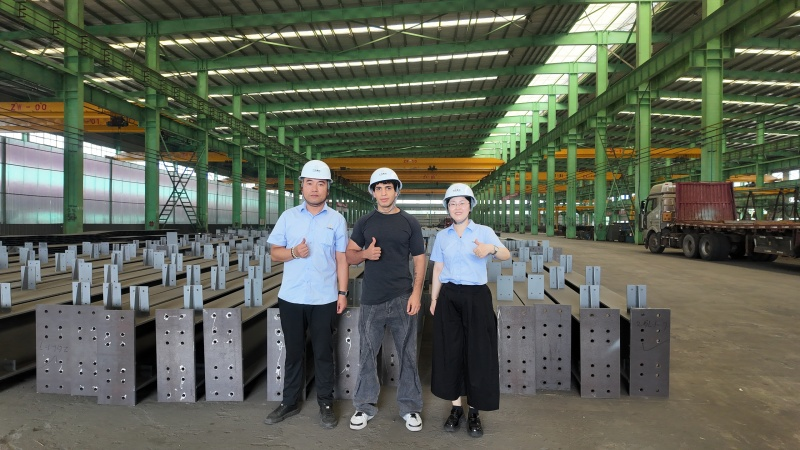
Minimized Construction Waste Through Precision Prefabricated Warehouse Manufacturing
Building warehouses using prefabrication methods cuts down on waste because most of the work happens in factories where conditions are predictable. Regular construction sites tend to waste around 10 to 15 percent of materials due to things like ordering too much stuff, damage from rain or sun, and simple mistakes when measuring. When manufacturers build components away from the actual site, they can reduce waste by as much as 90 percent thanks to those fancy computer systems that guide cutting and assembly processes. What arrives at the construction location is basically ready to go right into place, so there's no need for all that last minute cutting or storing extra materials that just take up space and eventually get tossed aside anyway.
How Off-Site Fabrication Reduces Material Waste by Up to 90%
Factory environments enable exact material optimization through three key advantages:
- Digital templates ensure millimeter-perfect component sizing
- Bulk material purchasing reduces packaging waste
- Recycled steel offcuts are immediately reused in production
This systematic approach contrasts sharply with traditional construction, where 30% of landfill waste originates from building materials (U.S. EPA, 2023). The controlled process also prevents weather-related material degradation—a factor responsible for 7% of on-site waste.
Role of Digital Design (BIM) and Just-in-Time Material Procurement
Building Information Modeling (BIM) creates virtual prototypes that identify precise material requirements before fabrication begins. This digital twin approach enables:
- Accurate calculation of steel, insulation, and cladding quantities
- Component-level optimization to minimize cutting waste
- Pre-fabrication of utility conduits within wall panels
Combined with just-in-time delivery, materials arrive only when needed—reducing on-site storage losses by 65% compared to conventional builds. Leading prefabrication facilities achieve 98% material utilization rates through this integrated digital workflow.
Lower Embodied Energy and Operational Carbon Footprint of Prefabricated Warehouses
Energy Efficiency Gains in Factory Production vs. Traditional Site-Built Methods
Prefabrication controlled at factories cuts down energy use because these operations gather all the heavy resource work in one place. Traditional building sites have different crews running diesel generators every day while moving materials back and forth constantly. Prefab warehouses handle about 80 percent of their fabrication inside specially designed facilities that save energy. The shift saves around 40% in transportation emissions since materials get shipped in bulk instead of piece by piece, according to PlanRadar's 2024 report. Plus, on site there's roughly two thirds less energy needed compared to conventional methods. When factories automate cutting and putting things together, they cut down heat losses and keep machines from sitting idle too long, which means lower carbon footprints overall for the finished product.
Integrated Sustainable Features: High-Performance Insulation, Solar-Ready Roofing, and Efficient HVAC
Prefab warehouses embed sustainability at the manufacturing stage with three core features:
- Thermal-envelope optimization: Factory-installed aerogel or polyisocyanurate (PIR) insulation achieves U-values ≤0.15 W/m²K—cutting heating and cooling loads by 30%
- Structural solar integration: Reinforced purlins and pre-routed conduit enable seamless PV installation without costly retrofits
- Smart HVAC compatibility: Ductwork alignment with modular panels ensures 97% airtightness, significantly boosting system efficiency
These integrated solutions reduce operational emissions by 22% annually compared to conventional warehouses.
Reduced On-Site Environmental Impact: Traffic, Noise, and Emissions
Building warehouses using prefabrication techniques cuts down on local environmental damage because most of the actual assembly happens in factories rather than on site. Around 90 percent of what needs to be built gets done there first. When it comes to trucks moving materials around, we're talking about cutting traffic by roughly half to three quarters compared with old school construction methods. That means significantly less exhaust coming out of tailpipes and not so much fuel being burned overall. Communities near these projects notice quieter surroundings since there are fewer concrete mixers rumbling around, cranes swinging overhead, and constant delivery trucks arriving throughout the day. The average construction site can get really loud sometimes, pushing past those 85 decibel marks that workers should stay below for safety reasons. Another plus is that when everything gets made centrally, big machines don't just sit idling all day long spewing tiny particles into the air along with nitrogen oxides. All these factors together help keep the air cleaner locally while also protecting nearby animal homes and business operations from too much disturbance. Plus, careful planning makes sure that multiple noisy or disruptive activities aren't happening at once, which solves another problem that regular construction sites tend to create with their traffic jams and sudden bursts of noise.
Lifecycle Sustainability: Prefabricated Warehouse vs. Conventional Construction
Comparative LCA Data: Global Warming Potential, Water Use, and Resource Depletion
Studies on the full life cycle show that prefabricated warehouses generally beat out regular construction when it comes to environmental impact. The carbon footprint goes down around 65% because factories can produce parts more efficiently and use less concrete overall. Factories with recycling systems cut water use by about 40%, which makes a big difference in areas where water is scarce. Materials get used better too, so we're not draining natural resources as fast as before. What's really impressive is how little waste there is from precision cutting techniques. Most projects throw away about 10% of materials, but prefab shops manage to keep waste under 1%. And those steel pieces? At the end of their useful life, almost all of them (like 95%) can be recycled again for new products.
| Environmental Indicator | Prefabricated Advantage vs. Conventional |
|---|---|
| Global Warming Potential | 65% reduction |
| Water Consumption | 40% reduction |
| Material Waste Generation | 90% reduction |
| Recyclability Rate (Steel) | 95% recovery |
When Prefabrication Isn’t Greener: Key Limitations and Mitigation Strategies
Transportation emissions for long-distance module delivery and non-recyclable composite materials can occasionally offset prefabrication benefits. To counteract these limitations:
- Prioritize regional manufacturing hubs within 200 miles
- Specify mono-material assemblies—such as structural steel—over mixed composites
- Implement design-for-disassembly protocols using bolted connections instead of adhesives
- Choose mineral wool insulation over polystyrene composites to maintain end-of-life recyclability
These targeted strategies ensure net-positive sustainability outcomes across the building lifecycle.
FAQ Section
What is prefabricated warehouse manufacturing?
Prefabricated warehouse manufacturing is a technique where components are manufactured in a factory setting and then assembled on-site. This method significantly reduces construction waste and enhances sustainability.
How does prefabrication reduce environmental impact?
Prefabrication reduces environmental impact by minimizing material waste, lowering embodied energy, cutting operational carbon footprints, and reducing on-site noise and traffic emissions.
What are the key advantages of using off-site fabrication?
Off-site fabrication offers advantages such as precise component sizing, reduced packaging waste, and immediate reuse of recycled materials, achieving up to 98% material utilization through a controlled digital workflow.
What are the limitations of prefabrication?
Some limitations of prefabrication include transportation emissions for long-distance deliveries and the use of non-recyclable composite materials. Strategies such as regional manufacturing and the use of mono-material assemblies can counteract these issues.
Table of Contents
- Minimized Construction Waste Through Precision Prefabricated Warehouse Manufacturing
- Lower Embodied Energy and Operational Carbon Footprint of Prefabricated Warehouses
- Reduced On-Site Environmental Impact: Traffic, Noise, and Emissions
- Lifecycle Sustainability: Prefabricated Warehouse vs. Conventional Construction
- FAQ Section