EN
EN

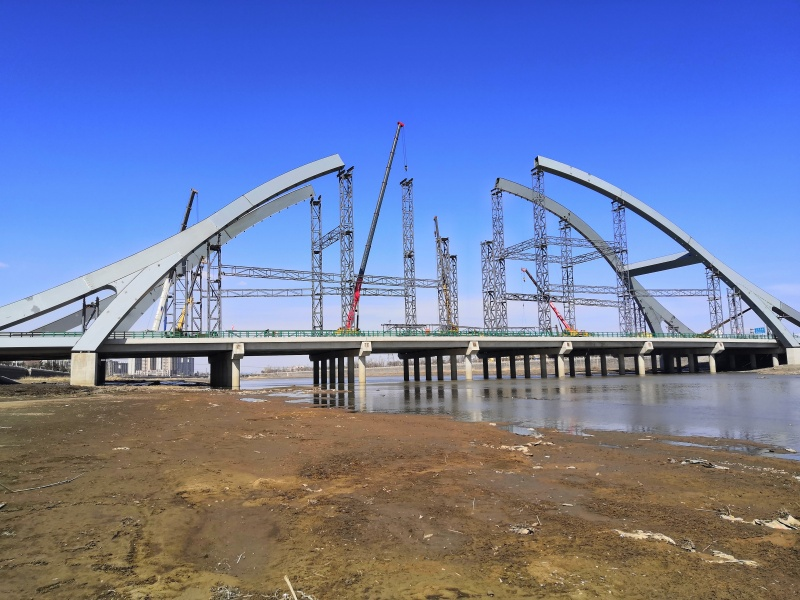
Steel Bridge Span Capabilities: From Conventional to Ultra-Long
Suspension Bridges: Enabling Ultra-Long Spans (>500 m) with Steel Cables and Towers
The amazing spans of suspension bridges that go over 500 meters are made possible by steel's incredible tensile strength. Think about it: these bridges have cables made up of thousands of strong steel wires that hold up huge weights as they stretch across deep canyons or big bodies of water. The steel towers themselves work like giant pillars transferring all those forces down to solid anchor points. Meanwhile, the decks on these bridges are built from something called orthotropic steel which is really light compared to other materials. This matters a lot when we talk about bridges like Japan's Akashi Kaikyō Bridge that stretches almost 2 kilometers long. Another thing working in steel's favor is how it can bend just enough without breaking when winds blow hard or earthquakes shake things up. Plus, newer types of steel resist corrosion much better than older versions did, so many of these structures last well over 100 years even when sitting right next to saltwater where rust would normally be a major problem.
Cable-Stayed Steel Bridges: Efficient Long-Span Solutions for 150–500 m Crossings
Cable stayed bridges work really well for distances ranging around 150 to 500 meters because they connect steel cables directly from the towers down to the bridge deck itself. What makes these designs special is that they don't require those huge anchoring systems found on other types of bridges. Plus, they can support those sleek, lightweight steel decks that cut down on wind resistance. Foundation costs drop anywhere from 25% to 40% when compared to traditional concrete options. The reason? Steel has this great strength to weight ratio which lets engineers play around with different cable layouts like harp shaped, fan shaped, or even radial patterns. These variations let builders strike just the right balance between how strong the bridge needs to be versus what looks good aesthetically. Prefab steel pieces also mean construction goes much faster since most parts are made off site. This matters a lot in crowded city areas where traffic disruptions are a nightmare, or near delicate ecosystems along rivers and coastal waters. And speaking of maintenance, newer weathering steels have been developed recently that practically take care of themselves over time, cutting back on all those expensive repairs we used to see with regular steel structures.
Why Steel Is the Preferred Material for Long-Span Bridge Construction
Unmatched Strength-to-Weight Ratio Supports Slender, High-Performance Steel Bridge Members
Steel's exceptional strength-to-weight ratio makes it uniquely suited for long-span applications, enabling slender, high-performance members that support heavy loads over vast distances. Bridges built with advanced steel alloys achieve up to 40% greater load capacity per ton than comparable concrete structures. This efficiency allows engineers to:
- Extend central spans without intermediate piers
- Reduce total material volume by 25–30%
- Minimize foundation size and environmental impact
Modular Fabrication and Rapid On-Site Assembly Reduce Disruption and Foundation Demands
Steel parts made in factories can really cut down on how long it takes to build something and also means less mess at the actual construction site. When manufacturers make these components away from the job site, they get standard pieces that are already engineered precisely, so when workers install them on site, everything goes together much faster than if they were pouring concrete on location. We're talking about cutting the time needed to put things together by about half compared to traditional methods. Getting materials just when they need them and having those parts fit together within fractions of a millimeter makes erecting buildings go smoother. This approach cuts down on road closures and traffic jams around construction zones. Plus, it works well even in places where environmental regulations would normally make traditional construction difficult.
| Construction Factor | Steel Bridges | Concrete Bridges |
|---|---|---|
| Average Assembly Time | 3–6 months | 8–14 months |
| On-Site Workforce | Reduced by 60% | Full crews required |
| Foundation Complexity | Minimal | Extensive |
| Future Modifications | Easily adaptable | Cost-prohibitive |
Data compiled from global infrastructure efficiency studies (2022–2024)
The synergy of speed, adaptability, and reduced foundation requirements makes steel the definitive choice for spanning complex terrain—while its durability, when paired with appropriate corrosion protection and dynamic-load resilience, ensures reliable, low-maintenance service for 100 years or more.
Advanced Engineering Strategies That Extend Steel Bridge Span Limits
Deflection Control: Pre-Cambering, Composite Deck Systems, and Reinforcement Chords
To maintain stiffness and serviceability across extended spans, engineers deploy targeted deflection control strategies. Key techniques include:
- Pre-cambering: Introducing upward curvature during fabrication to counteract load-induced sag
- Composite deck systems: Bonding concrete slabs to steel girders via shear connectors—boosting bending stiffness by 30–50% over non-composite designs
- Reinforcement chords: Adding post-tensioned steel tendons or carbon fiber—reinforced polymer (CFRP) overlays in tension-critical zones
Together, these methods suppress mid-span deformation and vibration, allowing increasingly slender superstructures without compromising safety or ride quality.
Aerodynamic Stability: Wind Bracing, Streamlined Girders, and Deck Shape Optimization
Wind-induced instability remains a primary constraint on long-span bridge design. Modern steel bridges mitigate this through integrated aerodynamic solutions:
- Triangular wind bracing that disrupts vortex shedding and suppresses resonant oscillations
- Teardrop-shaped girders, which lower drag coefficients by up to 40%
- Open-grid or perforated deck configurations, permitting wind passage instead of generating lift
- Computational fluid dynamics (CFD)-optimized fairings, tailored to redirect airflow around towers and cables
These innovations enable safe, stable operation—even in sustained winds exceeding 120 km/h—and prevent the kind of aerodynamic failure seen in early suspension bridges.
FAQ
What are the key advantages of steel in bridge construction?
Steel offers a high strength-to-weight ratio, allowing for slender and efficient bridge designs. It provides flexibility in design, reduces construction time, and lowers foundation costs.
How does steel contribute to environmental impact reduction in bridge construction?
Steel’s superior strength allows for less material usage, reducing environmental impact. Modular fabrication minimizes site disruption, and steel's durability reduces maintenance needs.
Are modern steel bridges susceptible to corrosion?
Modern steel bridges use advanced steel alloys that resist corrosion effectively, especially when proper protective measures are employed.
How do steel bridges handle wind-induced instability?
Steel bridges incorporate aerodynamic features like wind bracing and streamlined girders to stabilize against wind forces, ensuring safety even in high wind conditions.